
Piano Book PDF for Beginners: A Comprehensive Guide
Beginner piano learners benefit from accessible resources. PDF piano books offer structured lessons, covering posture, fingering, and essential techniques.
Free online lessons and printable plans supplement learning, while platforms like Flowkey and Simply Piano provide interactive experiences.
Alfred Prep Course is a popular, structured approach for beginners, aiding in musical development and skill acquisition.
Understanding the Demand for Digital Piano Resources
The surge in demand for digital piano resources, particularly PDF piano books for beginners, stems from increased accessibility and convenience. Traditional piano lessons can be costly and require rigid scheduling, creating barriers for many aspiring musicians. Digital resources circumvent these issues, offering affordable and flexible learning options.
The internet provides a wealth of information, but navigating it effectively can be challenging. Beginner piano books in PDF format offer a curated, structured learning path, guiding students through fundamental concepts like posture, fingering, and basic music theory. This structured approach is particularly valuable for self-learners.
Furthermore, the rise of interactive learning platforms like Flowkey and Simply Piano demonstrates a desire for engaging and personalized piano instruction. These platforms often complement PDF books, providing audio feedback and gamified lessons. The ability to learn at one’s own pace, coupled with the availability of free online lessons, fuels the demand for these resources. Music’s therapeutic benefits also contribute, as individuals seek creative outlets and stress relief through piano playing.
Popular Online Piano Learning Platforms
Several online platforms cater to beginner piano students, often complementing traditional PDF piano books. Flowkey stands out with its interactive lessons, offering step-by-step courses from beginner to advanced levels. It utilizes audio recognition to provide real-time feedback on playing accuracy, enhancing the learning experience.
Simply Piano, another popular app, gamifies the learning process, making it engaging for users of all ages. While praised for its user-friendly interface, some users note limitations with its free version and concerns regarding the cost of a permanent subscription. Both platforms offer structured curricula, but may not fully replace the depth of a comprehensive PDF piano book.

Beyond these, numerous websites provide free online piano lessons, serving as a valuable starting point for beginners. These resources often cover fundamental techniques like proper posture and fingering. However, the quality and structure can vary significantly. Utilizing a combination of a well-structured PDF book and interactive platforms provides a balanced and effective learning approach.

Flowkey: Interactive Piano Lessons

Flowkey distinguishes itself as a leading online platform for interactive piano lessons, often used alongside a PDF piano book for beginners. Its core strength lies in its real-time feedback system; the app “listens” to your playing via your device’s microphone and provides immediate guidance on accuracy and timing.
The platform boasts a vast library of songs, ranging from classical pieces to popular contemporary tunes, catering to diverse musical tastes. Lessons are structured into step-by-step courses, progressing from fundamental techniques to more complex arrangements. This structured approach complements the sequential learning found in many beginner PDF piano books.
Flowkey’s visual interface clearly displays the notes on the piano, making it easier for beginners to follow along. While a subscription is required for full access, the interactive nature and extensive song library make it a compelling option. It’s particularly beneficial for those who thrive with visual and auditory learning styles, enhancing their understanding of concepts learned from a PDF resource.
Simply Piano App: Pros and Cons
Simply Piano is a popular mobile application designed to teach piano, often considered alongside traditional methods like using a PDF piano book for beginners. A significant pro is its gamified approach, making learning engaging and motivating, particularly for younger learners. The app listens to your playing and provides instant feedback, similar to Flowkey, helping to correct mistakes in real-time.
However, Simply Piano has drawbacks. Users report concerns about obtaining a permanent subscription, with options sometimes limited or unclear. While effective for initial learning, some find it lacks the depth of instruction offered by a comprehensive PDF piano book or a qualified teacher. The app focuses heavily on reading sheet music, which may not suit all learning styles.
Furthermore, the free version is quite limited, pushing users towards a paid subscription. Despite these cons, Simply Piano can be a valuable supplementary tool, reinforcing concepts learned from a PDF resource and providing a fun, interactive practice environment. It’s best used as part of a broader learning strategy.
Free Online Piano Lessons: A Starting Point
For aspiring pianists seeking an affordable entry point, free online piano lessons offer a valuable starting point, often complementing a PDF piano book for beginners. Numerous websites and YouTube channels provide introductory tutorials covering fundamental concepts like piano posture, fingering, and basic music theory. These resources can help establish a foundation before investing in more structured learning.
However, the quality of free lessons varies significantly. While some are excellent, others may lack clarity or proper progression. It’s crucial to supplement these lessons with a more comprehensive resource, such as a well-structured PDF piano book, to ensure a balanced and thorough understanding; Relying solely on free content can lead to gaps in knowledge and incorrect technique.
Consider free lessons as a taste test, allowing you to explore the instrument and determine your learning style. They’re ideal for familiarizing yourself with basic concepts before committing to a paid course or utilizing a detailed PDF guide. Remember to prioritize proper technique and seek feedback when possible.
Piano Posture and Fingering Fundamentals
Establishing correct piano posture and fingering techniques is paramount for beginners, and a good PDF piano book will emphasize these from the outset. Proper posture – sitting upright with relaxed shoulders and a comfortable distance from the keys – prevents strain and facilitates efficient playing. A straight back and slightly bent elbows are key.
Fingering, the assignment of specific fingers to specific notes, is equally crucial. Consistent and logical fingering promotes fluidity, accuracy, and speed. Many PDF resources will include fingering suggestions within the sheet music, guiding beginners towards optimal hand positioning. Ignoring these suggestions can create unnecessary difficulty.
Beginners should focus on curved fingers, striking the keys with the pads rather than the tips. Regular practice of scales and exercises, as outlined in a PDF piano book, reinforces correct technique. Developing these fundamentals early on prevents bad habits that can hinder progress later.
Essential Beginner Piano Techniques
A comprehensive PDF piano book for beginners will introduce several essential techniques. First, learning to read music is fundamental; understanding notes, rhythms, and time signatures unlocks a world of musical possibilities. Many books start with simple melodies and gradually increase complexity.
Hand coordination is another vital skill. Beginners often struggle to play different rhythms or melodies with each hand simultaneously. Exercises focusing on independent hand movement, often found in PDF resources, are incredibly beneficial.
Dynamics – the variation in volume (loudness and softness) – add expression to playing. A PDF book will introduce dynamic markings like piano (p) for soft and forte (f) for loud. Practicing scales and pieces with varying dynamics enhances musicality. Finally, mastering basic chords provides a foundation for accompanying songs and improvising.
Choosing the Right Piano Book PDF
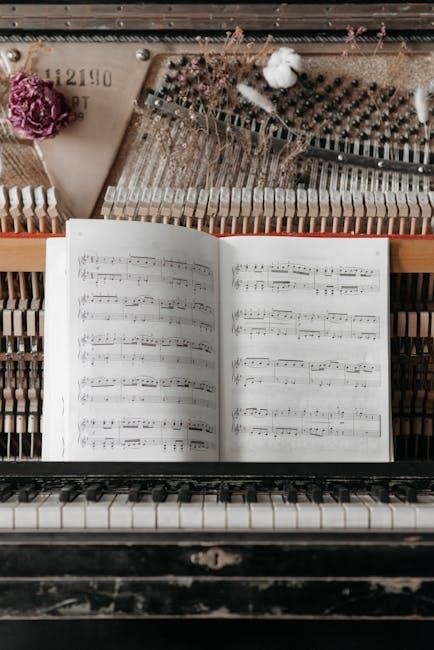
Selecting the ideal PDF piano book for beginners requires careful consideration. Assess your learning style – do you prefer a highly structured approach, like Alfred’s Prep Course, or a more flexible, song-based method? Look for books that clearly explain music theory concepts alongside practical exercises.
Consider the book’s content. Does it cover essential techniques like posture, fingering, and reading music? A good PDF will include diagrams and illustrations to aid understanding. Check if the book offers audio examples, allowing you to hear correct pronunciation and rhythm.
Evaluate the book’s progression. Is it gradual and manageable, or does it jump into complex material too quickly? Free sample pages can help you gauge the difficulty level. Finally, read reviews from other beginners to see what they thought of the book’s clarity and effectiveness.
Alfred Prep Course: A Structured Approach
Alfred’s Prep Course stands out as a highly recommended, structured method for beginner piano students. This series, often available as a PDF, systematically introduces fundamental concepts, building a solid foundation in music theory and technique. It progresses logically, starting with basic note reading and rhythm, gradually introducing more complex elements.
The course emphasizes proper hand position and fingering, crucial for developing good habits early on. Lesson plans, like Alfred Prep Course Level B, are readily available, offering teachers and self-learners a clear roadmap. Many find the familiar tunes and exercises engaging, fostering motivation.
While some may prefer more contemporary song selections, Alfred’s Prep Course’s strength lies in its comprehensive and methodical approach. It’s a reliable choice for those seeking a traditional, well-established path to piano proficiency, and many retain their beginner books for years.
Exploring Different Piano Types

Before diving into a piano book PDF, understanding the instrument itself is vital. Pianos broadly fall into two categories: acoustic and electronic. Acoustic pianos, like classical pianos, produce sound mechanically through hammers hitting strings, offering a rich, resonant tone cherished for its beauty and exceptional quality.
Electronic pianos, or digital pianos, utilize electronic technology to create sound, often mimicking acoustic piano tones. These offer advantages like volume control, headphone compatibility, and portability. However, the sound differs significantly; an electronic piano is to a piano what an electric guitar is to an acoustic guitar;
The choice depends on individual needs and preferences. Acoustic pianos require tuning and more space, while electronic pianos offer convenience and versatility. Beginners should consider which type best suits their learning style and environment, as this impacts practice and enjoyment. Resources like Piano Buyer offer detailed comparisons;
Acoustic Pianos vs. Electronic Pianos

Choosing between acoustic and electronic pianos significantly impacts a beginner’s learning journey. Acoustic pianos, traditionally crafted, deliver a nuanced sound and responsive touch, fostering a deeper connection with the instrument. They require regular tuning and offer a timeless aesthetic, but are less portable and more expensive.
Electronic pianos, conversely, provide convenience and affordability; They often feature weighted keys mimicking acoustic action, headphone jacks for silent practice, and diverse sound options. While the sound reproduction isn’t identical to an acoustic piano, advancements have narrowed the gap considerably.
For beginners utilizing a piano book PDF, an electronic piano can be an excellent starting point, offering flexibility and cost-effectiveness. However, access to an acoustic piano for occasional playing is beneficial to develop a comprehensive understanding of touch and tone. Ultimately, the best choice aligns with budget, space, and personal preferences.
Understanding Piano Terminology: “Piano” (p)
Decoding musical terminology is crucial for any piano beginner, and understanding “piano” (p) is a fundamental first step. In sheet music, “piano” isn’t referring to the instrument itself, but rather a dynamic marking. It instructs the pianist to play a passage softly, with a delicate touch.
When studying with a piano book PDF, encountering “p” signifies a shift in volume. Beginners often struggle with dynamic control, so consciously practicing soft passages is essential. This builds sensitivity in the fingers and develops expressive playing.
The origin of the term is fascinating; in Italian, “piano” means “soft.” This historical context helps remember its meaning. Recognizing dynamic markings like “p” alongside other terms – crescendo, diminuendo, forte – enhances musical interpretation and elevates performance beyond simply playing the correct notes. Mastering these basics, guided by a structured PDF resource, sets a strong foundation.
The Piano Book: A Renowned Purchasing Guide
Larry Fine’s “The Piano Book” is considered the definitive guide for anyone considering purchasing a piano, whether acoustic or digital. While not a beginner learning resource itself, it’s invaluable for understanding the market and making informed decisions – especially when considering a long-term investment.
For those starting their piano journey and potentially seeking an instrument to practice with, understanding the nuances discussed in “The Piano Book” can be beneficial. It objectively reviews various brands and models, detailing their strengths and weaknesses. This knowledge empowers buyers to avoid common pitfalls.
Although a PDF piano book focuses on playing the instrument, “The Piano Book” addresses the instrument itself. It covers aspects like sound quality, action, and durability. Even if initially using a keyboard or renting, familiarizing oneself with these concepts prepares for future upgrades and ensures a satisfying musical experience. It’s a resource to consult before committing to a purchase.
Nord Piano: Focus on Piano Sound and Performance
While a PDF piano book guides beginners through learning notes and techniques, the Nord Piano represents a different facet of the piano world – high-end digital stage pianos renowned for their exceptional sound and performance capabilities. It’s a destination for players who prioritize realistic piano feel and sonic quality.
For a beginner, understanding the existence of instruments like the Nord Piano can be inspiring. It showcases the potential for musical expression and the level of artistry achievable with dedicated equipment. Though not essential for initial learning, it highlights the possibilities beyond basic practice.
The Nord Piano’s focus lies in faithfully recreating the sound of acoustic pianos, offering a diverse range of sampled instruments. Its controller-based design emphasizes performance, allowing for nuanced expression. It’s a tool for experienced players, but knowing such instruments exist can motivate beginners on their musical path, demonstrating the rewards of dedication and practice.
Finding Free Printable Piano Lesson Plans
Supplementing a PDF piano book with free, printable lesson plans can significantly enhance a beginner’s learning experience. These plans often break down complex concepts into manageable steps, providing structured practice routines and exercises. Resources online offer a wealth of materials, catering to various learning styles and paces.

Alfred Prep Course lesson plans, for example, are frequently available as printables, aligning with their popular beginner book series. These plans typically include specific musical pieces, technical exercises, and theoretical explanations. Searching online reveals numerous websites and forums dedicated to sharing free piano resources.
The benefit of printable plans lies in their tangibility. Students can mark progress, annotate exercises, and create a personalized learning journal. While digital resources are convenient, the act of physically engaging with printed materials can reinforce learning and foster a deeper connection with the music. Utilizing these alongside a core PDF book creates a well-rounded approach.
Resources for Home Piano Teaching
Embarking on self-guided piano learning with a PDF book requires leveraging available resources. Beyond the book itself, numerous online platforms and tools can support a successful home teaching experience. Websites offering free piano lessons, like those mentioned, provide supplementary instruction and diverse perspectives.
Interactive apps, such as Simply Piano and Flowkey, offer gamified learning, providing immediate feedback and motivation. These can be particularly helpful for beginners struggling with technique or rhythm. Printable lesson plans, readily available online, complement PDF books by offering structured practice routines and exercises.
Furthermore, online communities and forums connect learners with experienced pianists and teachers. These platforms facilitate Q&A sessions, peer support, and access to valuable learning materials. Combining a solid PDF piano book with these resources empowers individuals to learn effectively and enjoyably at their own pace, fostering a lifelong love for music.

Evaluating Piano Book PDFs: Key Features
Selecting the right PDF piano book for beginners demands careful evaluation. A crucial feature is a structured curriculum, progressing logically from fundamental concepts like posture and fingering to more complex techniques. Look for books incorporating clear diagrams and illustrations to aid understanding of music notation and hand positioning.
Effective books include a diverse range of exercises and songs, catering to different learning styles and musical preferences. The presence of audio examples is invaluable, allowing learners to hear correct pronunciation and rhythm. Consider books offering supplementary materials, such as practice tracks or online resources.
Furthermore, assess the book’s clarity and conciseness. Beginner-friendly language and a well-organized layout are essential for avoiding confusion. A PDF format should be easily navigable, allowing quick access to specific lessons or exercises. Prioritize books with positive reviews and recommendations from experienced piano teachers or learners.