
Chevy Interchangeable Wheels Guide: A Comprehensive Overview (12/21/2025)
Navigating Chevy wheel swaps requires understanding bolt patterns, offset, and compatibility; this guide details fitment for Silverado, Equinox, and Camaro models, ensuring a safe upgrade.

The practice of swapping wheels on Chevrolet vehicles is a popular method for customization, cost savings, or simply achieving a desired aesthetic. However, successful interchange isn’t as simple as just finding wheels that look like they’ll fit. Several critical factors dictate compatibility, ensuring both safety and proper vehicle performance. This guide serves as a comprehensive resource for understanding these factors and navigating the world of Chevy wheel interchange.
Chevrolet, throughout its history, has utilized a variety of bolt patterns, offsets, and wheel sizes across its diverse model lineup. Understanding these specifications is paramount. Incorrect wheel fitment can lead to vibrations, premature wear on suspension components, and, most importantly, a potentially dangerous driving situation. We will delve into the common Chevy bolt patterns, explain offset and backspacing, and provide resources for verifying compatibility with your specific vehicle.
This guide aims to empower Chevy owners to make informed decisions when considering wheel swaps, whether opting for aftermarket options or exploring used wheels from other Chevy models.
Understanding Chevy Bolt Patterns
A Chevy’s bolt pattern – the number and spacing of the lug nuts – is the foundational element of wheel compatibility. It’s crucial to match the bolt pattern of the new wheels precisely to the vehicle’s hub. Bolt patterns are expressed in two numbers: the first indicates the number of lug nuts, and the second represents the diameter of the circle formed by the lug nut holes, measured in inches or millimeters.
Chevrolet vehicles utilize both 5-lug and 6-lug patterns, varying depending on the model and year. Common patterns include 5×4.5″ (5×114.3mm), 5×5.5″ (5x140mm), 6×5.5″ (6×139.7mm), and 6×6.5″ (6×165.1mm). Attempting to mount wheels with an incorrect bolt pattern is impossible without using adapters, which introduce potential safety concerns.
Identifying your vehicle’s bolt pattern is the first step. Resources like wheel-size.com and vehicle-specific forums can provide accurate information. Always double-check before purchasing wheels to ensure a proper and secure fit.
Common Chevy Bolt Patterns Explained
Chevrolet employs several prevalent bolt patterns across its diverse lineup. The 5×4.5″ (5×114.3mm) pattern is frequently found on many Chevy cars and crossovers, offering a wide range of wheel options. The 5×5.5″ (5x140mm) pattern is common on models like the Equinox and Terrain, often allowing interchangeability within those specific vehicle families.
For trucks, the 6×5.5″ (6×139.7mm) bolt pattern is standard on 1500 series Silverados and Sierras, providing robust support for heavier loads. Heavier-duty 2500 and 3500 series trucks utilize a 6×6.5″ (6×165.1mm) pattern, demanding wheels engineered for increased strength and durability.
Understanding these patterns is vital for successful wheel swaps. Utilizing online fitment guides and verifying compatibility before purchase prevents costly mistakes and ensures a secure, reliable connection between the wheel and the vehicle.
6-Lug Chevy Bolt Patterns
Chevrolet’s 6-lug patterns are primarily reserved for its truck and SUV offerings, designed to handle substantial weight and demanding conditions. The 1500 series Silverado and Sierra trucks consistently utilize a 6×5.5″ (6×139.7mm) bolt pattern. This configuration provides a strong foundation for both work and recreational use, supporting a variety of wheel styles and sizes.
Stepping up to the 2500 and 3500 series Silverado and Sierra models introduces a more robust 6×6.5″ (6×165.1mm) bolt pattern. This larger pattern is crucial for accommodating the increased payload and towing capacity of these heavy-duty trucks. When swapping wheels on these models, prioritizing strength and proper load ratings is paramount for safety and performance.
Always confirm compatibility before purchasing, ensuring the new wheels meet or exceed the vehicle’s specifications.
1500 Series Trucks (Silverado, Sierra) ౼ 6×5.5″ (6×139.7mm)
The Chevy Silverado and Sierra 1500 series trucks overwhelmingly feature a 6×5.5″ (6×139.7mm) bolt pattern, offering a wide range of aftermarket wheel options. This popular configuration allows for diverse styling choices, from aggressive off-road designs to sleek, modern aesthetics. When considering a wheel swap, maintaining the correct offset is crucial to avoid rubbing or interference with suspension components.
Many owners upgrade to larger diameter wheels, typically 20 or 22 inches, paired with appropriate tire sizes to enhance the truck’s appearance and handling. Ensuring the new wheels have a load rating equal to or greater than the original equipment is vital for safe operation. Utilizing a wheel fitment calculator is highly recommended to verify compatibility.
Proper torque specifications must always be followed during installation.
2500/3500 Series Trucks (Silverado, Sierra) ౼ 6×6.5″ (6×165.1mm)
Chevy Silverado and Sierra 2500/3500 series trucks utilize a robust 6×6.5″ (6×165.1mm) bolt pattern, designed to handle heavier loads and demanding applications. This pattern, while less common than the 1500 series, still provides a respectable selection of aftermarket wheel options, often geared towards work-truck functionality or lifted aesthetics.

Due to the increased weight capacity requirements, wheels for these trucks must have a suitable load rating. Offset is particularly important; incorrect offset can lead to premature wear on wheel bearings and suspension components. When upgrading, consider the intended use – whether it’s for towing, hauling, or simply improving appearance.
Always double-check fitment and torque specifications before operation.
5-Lug Chevy Bolt Patterns
Chevrolet vehicles employing a 5-lug configuration represent a significant portion of the brand’s lineup, spanning numerous car and crossover models. Understanding these patterns is crucial for successful wheel interchange. Two primary 5-lug bolt patterns are prevalent: 5×4.5″ (5×114.3mm) and 5×5.5″ (5x140mm). The 5×4.5″ pattern is commonly found on many Chevy cars and smaller crossovers, offering a wide array of aftermarket wheel choices.
Conversely, the 5×5.5″ pattern is frequently seen on models like the Equinox and Terrain, requiring specific wheel compatibility checks. When considering a wheel swap, verifying the correct bolt pattern is paramount to ensure proper fitment and safe operation; Offset and backspacing also play vital roles in avoiding rubbing or suspension interference.
Chevy Cars & Crossovers — 5×4.5″ (5×114.3mm)
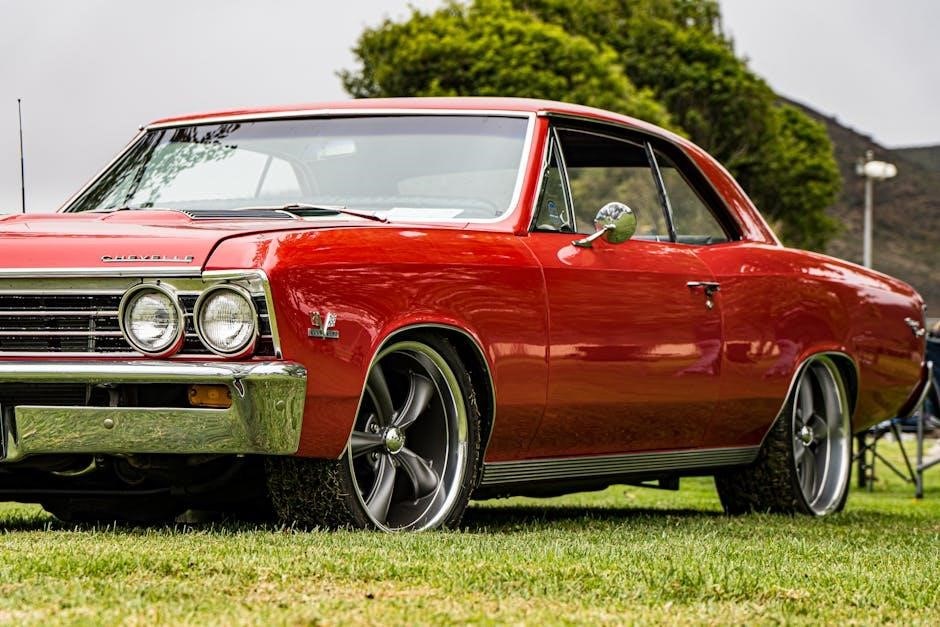
The 5×4.5″ (5×114.3mm) bolt pattern is exceptionally common across a diverse range of Chevrolet cars and crossovers, making it a relatively easy pattern for wheel upgrades and replacements. Vehicles like the Malibu, Impala, and many older Chevy sedans utilize this configuration. This widespread adoption translates to a vast selection of aftermarket wheels readily available in various styles and price points.
However, it’s crucial to remember that simply matching the bolt pattern isn’t enough. Offset and wheel width must also be considered to prevent rubbing against suspension components or the vehicle’s body. Always double-check these specifications before purchasing new wheels to guarantee a proper and safe fit.
Chevy Equinox/Terrain — 5×5.5″ (5x140mm)
Chevrolet Equinox and Terrain models typically utilize a 5×5.5″ (5x140mm) bolt pattern, presenting unique considerations for wheel interchange. While not as universally common as the 5×4.5″ pattern, a solid selection of compatible wheels exists, particularly within the aftermarket. Owners seeking to upgrade often find options from GMC vehicles sharing this bolt circle, expanding available choices.
Careful attention to offset is paramount with these crossovers. Incorrect offset can lead to tire rubbing or altered handling characteristics. Utilizing a wheel fitment calculator is highly recommended to verify proper clearance and ensure a safe, aesthetically pleasing result. Prioritize wheels specifically designed or confirmed compatible with the Equinox/Terrain for optimal performance.
Offset and Backspacing Considerations
Wheel offset and backspacing are critical factors when swapping Chevy wheels, directly impacting handling and appearance. Offset, measured in millimeters, indicates the distance between the wheel’s mounting surface and its centerline. Incorrect offset can cause tires to rub against suspension components or the vehicle’s body.
Backspacing, the distance from the wheel’s mounting surface to the wheel’s rear edge, works in conjunction with offset. Maintaining the original or a closely matching offset/backspacing is generally recommended. Deviations require careful calculation and potential modifications. Positive offset pushes the wheel outward, while negative offset pulls it inward. Always verify sufficient clearance and consult fitment guides before installing new wheels to avoid costly issues.
Wheel Width and Diameter Compatibility
Determining compatible wheel width and diameter is crucial for safe and effective Chevy wheel swaps. While maintaining the original diameter is simplest, exploring larger diameters requires careful consideration of tire size and suspension clearance.
Wheel width impacts tire profile; wider wheels necessitate wider tires, potentially affecting handling and ride quality. Ensure the new wheel width is within the manufacturer’s recommended range for your specific Chevy model. Increasing wheel diameter often requires lower-profile tires to maintain the overall tire diameter, preserving speedometer accuracy. Always prioritize safety and consult fitment calculators to verify compatibility, avoiding rubbing or suspension interference.
Understanding Wheel Material Options
Choosing the right wheel material balances durability, weight, and aesthetics for your Chevy. Steel wheels offer robust strength and affordability, making them ideal for demanding conditions or budget-conscious builds. However, they are heavier than alloy alternatives, potentially impacting performance and fuel economy.
Aluminum alloy wheels provide a significant weight reduction, enhancing acceleration, braking, and handling. Their diverse designs offer superior styling options, but they generally come at a higher cost and may be more susceptible to damage from impacts. Consider your driving style and priorities when selecting a material; steel for ruggedness, alloy for performance and appearance.

Steel Wheels: Durability and Cost
Steel wheels represent a practical and economical choice for Chevy owners prioritizing strength and affordability. Constructed from solid steel, these wheels excel in resisting bending and cracking, making them exceptionally durable for off-road adventures, work trucks, or harsh winter conditions. Their robust nature minimizes the risk of damage from potholes and impacts.
However, steel wheels are considerably heavier than alloy counterparts, potentially leading to a slight decrease in fuel efficiency and a less responsive driving experience. While offering limited styling options, their simple design and lower price point make them a popular option for those seeking a reliable and budget-friendly wheel solution for their Chevy.
Aluminum Alloy Wheels: Lightweight and Style
Aluminum alloy wheels offer a compelling blend of reduced weight and enhanced aesthetics for your Chevy. Crafted from a blend of aluminum and other metals, these wheels significantly decrease rotational mass, resulting in improved acceleration, braking performance, and overall fuel efficiency. This lighter weight contributes to a more responsive and engaging driving experience.
Beyond performance benefits, alloy wheels boast a wide array of designs, finishes, and styles, allowing Chevy owners to personalize their vehicle’s appearance. While generally more expensive than steel wheels, their superior strength-to-weight ratio and visual appeal make them a popular upgrade. However, they are more susceptible to damage from severe impacts compared to their steel counterparts.
Tire Size and Wheel Diameter Relationship
Understanding the interplay between tire size and wheel diameter is crucial for maintaining proper vehicle performance and safety when swapping wheels on your Chevy. The tire’s aspect ratio—the sidewall height expressed as a percentage of the tire’s width—directly impacts ride comfort, handling, and speedometer accuracy.
Changing wheel diameter necessitates adjusting the tire size to maintain the overall tire diameter, ensuring minimal deviation from the factory specification. Significant alterations can lead to speedometer inaccuracies, ABS system malfunctions, and compromised handling. Utilize online tire size calculators to determine the appropriate tire size for your new wheel diameter, prioritizing a consistent overall diameter. Always prioritize safety and consult with a tire professional for guidance.

Using Wheel Fitment Calculators
Wheel fitment calculators are invaluable tools when considering interchangeable wheels for your Chevy, eliminating guesswork and potential compatibility issues. These online resources allow you to input your vehicle’s year, make, and model, along with the desired wheel specifications – diameter, width, and offset – to predict fitment.
Key metrics assessed include bolt pattern confirmation, offset calculations to prevent rubbing, and brake caliper clearance checks. Reputable calculators, like those found on Wheel-Size.com, provide visual representations and detailed analyses. However, remember that calculators offer estimations; physical test fitting is always recommended. Prioritize calculators that account for suspension lift or lowering modifications for accurate results, ensuring a safe and proper wheel fitment.
Finding Compatible Wheels for Specific Chevy Models
Determining compatible wheels varies significantly between Chevy models. For Silverado/Sierra trucks, wheels sharing the 6×5.5″ (6×139.7mm) or 6×6.5″ (6×165.1mm) bolt pattern are generally interchangeable, but offset is crucial. Equinox/Terrain models typically utilize a 5×5.5″ (5x140mm) pattern, opening options from similar GM SUVs.
Camaro wheel swaps with Mustangs are possible, but require careful consideration of offset and brake caliper clearance – it’s not a direct fit. Utilizing online databases and forums dedicated to specific Chevy models can reveal successful swap experiences. Always verify bolt pattern, offset, and brake compatibility before purchasing. Remember, prioritizing correct fitment ensures safety and avoids costly mistakes during installation.
Silverado/Sierra Wheel Compatibility
Silverado and Sierra trucks, particularly 1500 series, commonly share the 6×5.5″ (6×139.7mm) bolt pattern, allowing for broad wheel interchangeability within those generations. However, 2500/3500 series utilize a 6×6.5″ (6×165.1mm) pattern, limiting compatible options. Offset is paramount; a significant offset change can cause rubbing or affect handling.
Factory wheels from similar year ranges are generally safe bets, but aftermarket wheels require careful scrutiny. Consider the truck’s lift or lowering modifications, as these alter wheel well clearance. Always double-check the wheel’s backspacing to ensure adequate clearance around suspension components and brake calipers. Utilizing a wheel fitment calculator is highly recommended before committing to a purchase.
Equinox/Terrain Wheel Compatibility
Chevy Equinox and GMC Terrain models often feature a 5×5.5″ (5x140mm) bolt pattern, creating interchangeability within those vehicle lines and sometimes extending to other GM crossovers. However, variations exist across different model years, so precise confirmation is crucial. Offset plays a vital role; incorrect offset can lead to tire rubbing against the wheel wells or suspension components.
When exploring wheel swaps, prioritize wheels designed for similar vehicle weights and load ratings. Utilizing factory wheels from compatible GM vehicles is generally a safe approach. Aftermarket options require careful consideration of backspacing and offset to avoid clearance issues. A wheel fitment calculator is an invaluable tool for verifying compatibility before making a purchase, ensuring a secure and aesthetically pleasing fit.
Camaro/Mustang Wheel Compatibility (Potential Swaps)
Swapping wheels between a Chevy Camaro and Ford Mustang is a popular, though complex, modification. While not a direct bolt-on, it’s achievable with adapters or careful wheel selection. Camaros typically utilize a 5×4.5″ (5×114.3mm) bolt pattern, similar to many Mustangs, but offset differences are significant. Mustang wheels generally have a higher offset than Camaros.
Adapters can bridge the gap, but introduce potential safety concerns if not high-quality and properly installed. Direct swaps require finding Mustang wheels with an offset close to Camaro specifications. Thorough research and test fitting are essential. Consider brake caliper clearance and potential rubbing issues. Prioritize safety and professional installation when attempting this modification, ensuring proper torque and hub-centric fitment.
Aftermarket Wheel Brands for Chevy
Numerous aftermarket brands cater to Chevy owners seeking wheel upgrades, offering diverse styles and price points. Popular choices include Method Race Wheels, known for their off-road durability, and Fuel Off-Road, specializing in aggressive truck designs. For a blend of style and performance, consider Black Rhino Wheels or KMC Wheels, offering a wide range of finishes and sizes.
More budget-friendly options like Vision Wheel and American Racing provide reliable choices. When selecting a brand, prioritize quality, material (flow-formed vs. cast), and load rating. Research customer reviews and ensure the brand offers wheels compatible with your specific Chevy model’s bolt pattern and offset. Don’t forget to factor in warranty coverage for peace of mind.
Where to Buy Interchangeable Chevy Wheels
Finding compatible Chevy wheels is convenient through various channels, both online and in brick-and-mortar stores. Major online retailers like Discount Tire Direct, Tire Rack, and Amazon offer extensive selections and competitive pricing. Local tire shops and wheel specialists provide expert advice and installation services, allowing for a personalized fitment experience.

Marketplace platforms like eBay and Craigslist can yield deals on used wheels, but require careful inspection for damage. Dedicated Chevy forums often host classifieds sections where members sell wheels. When purchasing, verify the seller’s reputation and ensure the wheels are in good condition and match your vehicle’s specifications. Consider shipping costs and return policies before finalizing your purchase.

Safety Considerations When Swapping Wheels
Prioritizing safety is paramount when changing Chevy wheels. Always use a torque wrench to tighten lug nuts to the manufacturer’s specified torque, preventing loosening or damage. Inspect wheels for cracks, bends, or corrosion before installation. Ensure proper wheel and tire balance to avoid vibrations and uneven wear.
Verify wheel clearance to prevent rubbing against suspension components or body panels. Never mix radial and bias-ply tires. If changing tire sizes significantly, recalibrate the tire pressure monitoring system (TPMS). Professional installation is recommended, especially for those unfamiliar with wheel swaps. Regularly inspect lug nut torque after the initial miles driven post-installation, ensuring continued safety and vehicle performance.
Torque Specifications for Chevy Wheels
Correct lug nut torque is crucial for Chevy wheel safety and longevity. Specifications vary significantly by model and wheel type (steel vs. alloy). Generally, 1500 series Silverados/Sierras require 140 lb-ft (190 Nm), while 2500/3500 series trucks often need 180 lb-ft (244 Nm).
Chevy cars and crossovers typically fall between 100-120 lb-ft (136-163 Nm). Always consult your vehicle’s owner’s manual or a reliable service manual for the precise torque specification for your specific model year and wheel configuration. Using a calibrated torque wrench is essential; under-torquing can lead to wheel detachment, and over-torquing can damage studs or wheels. Re-check torque after 50-100 miles of driving.
Wheel Hub Centric vs. Lug Centric
Understanding wheel centering is vital for a secure Chevy wheel installation. Lug-centric wheels rely solely on the lug nuts to center the wheel on the hub, potentially leading to vibrations if not perfectly aligned. Hub-centric wheels, however, feature a center bore that matches the vehicle’s hub diameter, providing a precise and stable fit.
Most modern Chevy vehicles are hub-centric, offering superior balance and reduced stress on the lug studs. When swapping wheels, ensure the new wheels are either hub-centric for your vehicle or use hub-centric rings to adapt lug-centric wheels. These rings fill the gap between the wheel bore and the hub, replicating the benefits of a true hub-centric design, improving safety and ride quality.
Checking for Wheel Clearance Issues
Before finalizing any wheel swap on your Chevy, meticulous clearance checks are essential. Larger diameter or wider wheels can interfere with suspension components, brake calipers, and even the wheel wells, especially during turns or over bumps. Begin by visually inspecting the space between the tire and these components with the steering wheel fully turned in both directions.
A simple test involves placing a spacer between the tire and suspension parts to simulate full compression. Additionally, check for rubbing on the fender liners. If interference exists, consider narrower wheels, higher offset, or a lift kit to create sufficient clearance. Ignoring these issues can lead to damage and compromise vehicle safety.
Resources for Chevy Wheel Information
Numerous online resources assist in navigating Chevy wheel interchangeability. Wheel-Size.com provides a comprehensive tire and wheel fitment guide, allowing users to input their vehicle details for accurate recommendations. Chevrolet’s official website often features specifications for factory wheel options, aiding in identifying compatible sizes.
Online Chevy enthusiast forums, like those on SilveradoSierra.com or Camaro5.com, are invaluable for real-world experiences and user-submitted fitment data. Tire retailers such as Discount Tire and Tire Rack offer online tools and expert advice. Finally, consult with professional wheel and tire installers for personalized guidance and ensure proper installation and balancing for optimal performance and safety.